How do I choose the right lighting for a bathroom renovation?
This is a subtitle for your new post
How to Choose the Right Lighting for a Bathroom Renovation in the GS Plumbing Service Area
Lighting is one of the most critical aspects of any bathroom renovation, yet it’s often overlooked. The right lighting not only ensures a functional and safe bathroom but also elevates style, enhances space perception, and boosts energy efficiency. For homeowners across the GS Plumbing service area—including Oakville, Burlington, Mississauga, Etobicoke, Guelph, Toronto, and surrounding GTA neighborhoods—choosing the right fixtures and placement is essential for creating a bathroom that’s both beautiful and practical.
In this guide, we’ll explore every aspect of choosing the right bathroom lighting, from understanding lighting types to safety considerations, fixture placement, and energy-saving strategies—all tailored for master bathrooms, main bathrooms, and ensuite renovations in the GTA.
1. Understand the Three Main Types of Bathroom Lighting
A functional and luxurious bathroom lighting plan always includes layered lighting. Relying on a single ceiling fixture is inefficient and can make spaces feel dark or cramped. Experts from GS Plumbing recommend layering ambient, task, and accent lighting.
a) Ambient Lighting – The Foundation
Ambient lighting provides general illumination and allows safe movement throughout the bathroom. It is the foundation of your lighting design.
- Ceiling-Mounted Fixtures: Flush-mount or semi-flush-mount ceiling lights work well for smaller bathrooms in Oakville and Etobicoke. They create an even distribution of light, perfect for daily routines.
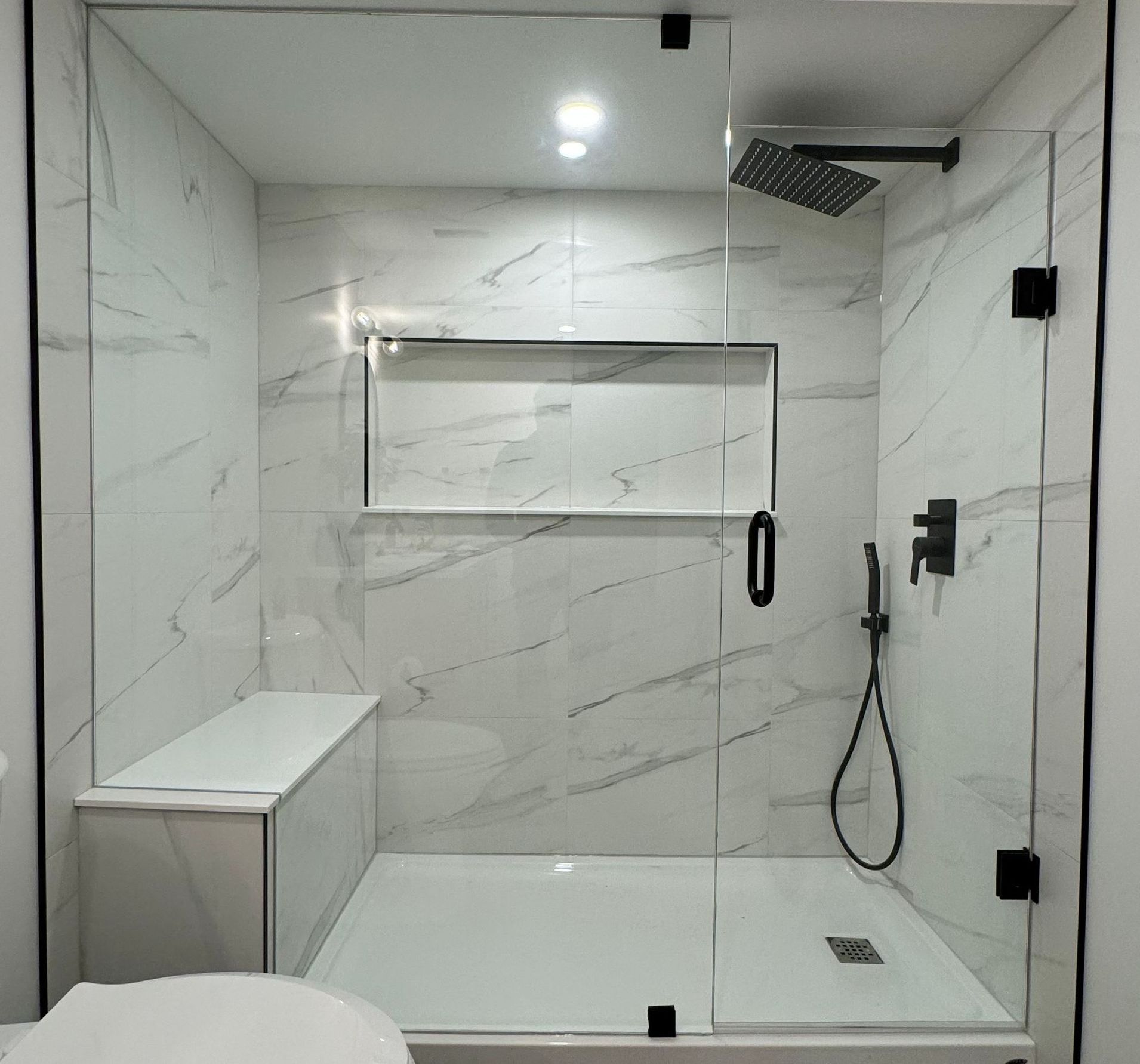
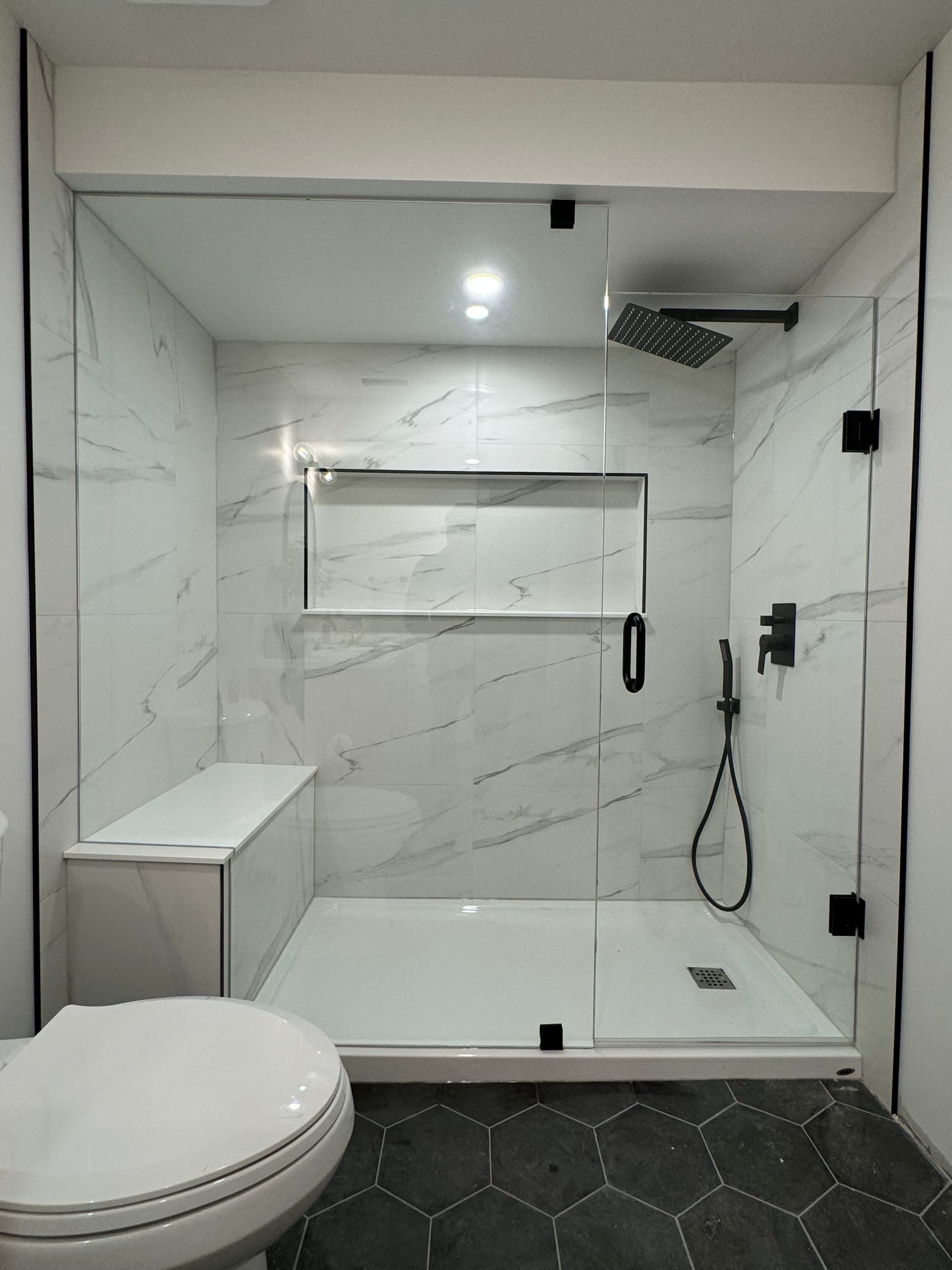
- Recessed Lighting: Ideal for Burlington and Guelph bathrooms with lower ceilings or narrow layouts. Recessed LED lights provide a clean look and can be spaced evenly to prevent dark corners.
- Layered Ceiling Design: For larger Toronto master bathrooms, consider combining a central fixture with recessed perimeter lights to eliminate shadows and highlight design features.
Pro Tip: In areas like Mississauga or Etobicoke where natural light may be limited due to orientation or neighboring buildings, ambient lighting should be slightly brighter or include multiple sources to compensate for low daylight during winter months.
b) Task Lighting – Precision Where It Counts
Task lighting focuses on areas where accuracy is essential, such as shaving, applying makeup, or grooming.
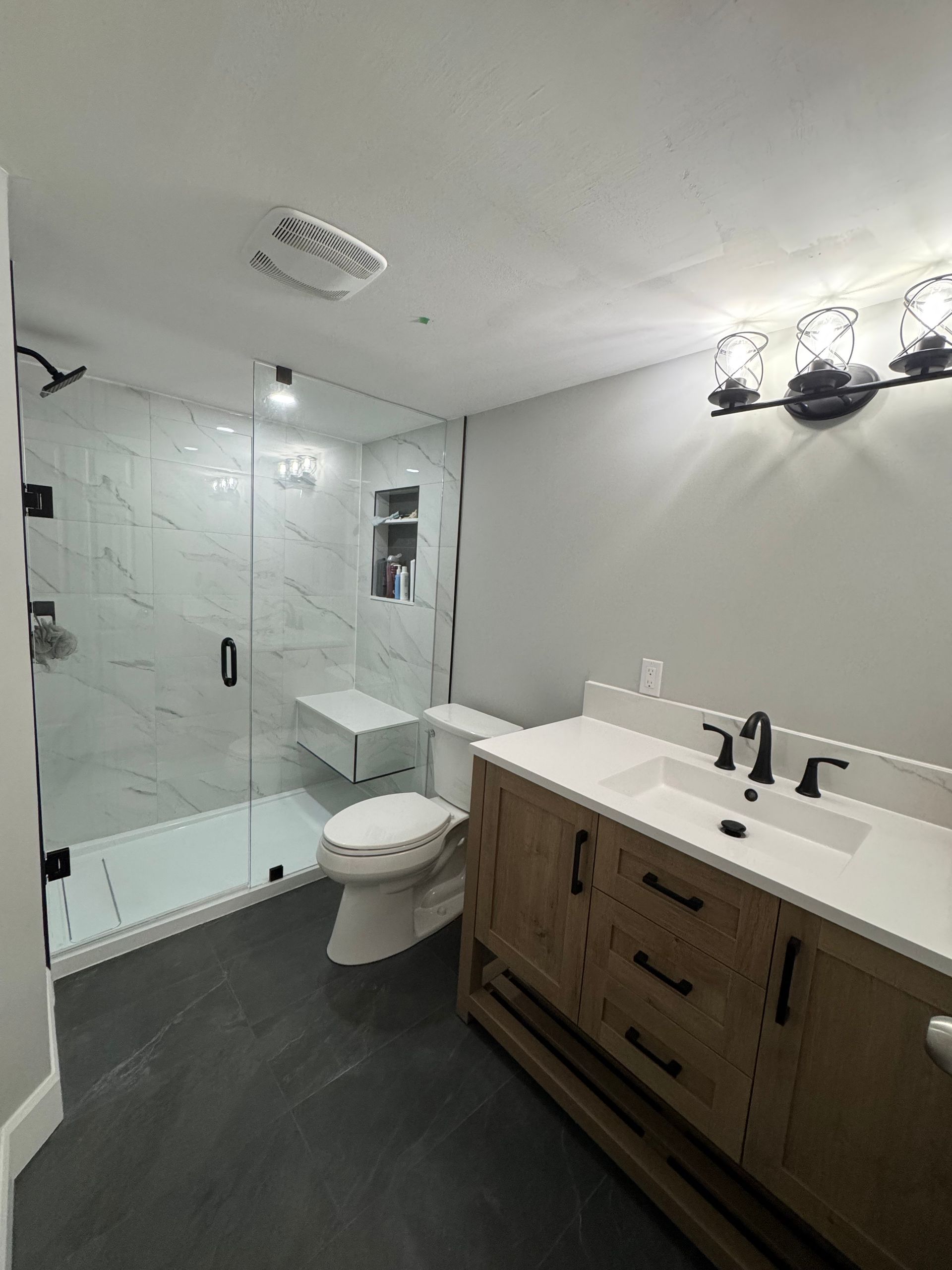
- Vanity Lighting: GS Plumbing recommends placing wall sconces on both sides of a mirror to prevent shadows on the face. Avoid lights above the mirror alone, which can create downward shadows.
- LED Strip Lighting: Integrate LED strips under floating vanities or along counters for soft, functional illumination. This is particularly helpful in Guelph or Oakville homes with deep vanities or double sinks.
- Color Temperature: Use bulbs with 3000–4000K color temperature. This provides a natural daylight effect that is flattering for skin tones without appearing too cool or clinical.
- Adjustable Light Levels: For homeowners in Toronto or Burlington who use their bathrooms for both early morning routines and late-night relaxation, consider dimmable fixtures to control intensity.
Example: In a Mississauga split-zone master bathroom, each vanity can have independent task lighting with separate dimmers, allowing simultaneous use without interference.
c) Accent Lighting – Highlighting Design
Accent lighting adds depth and luxury to a bathroom, showcasing features like tile textures, built-in niches, or architectural details.
- Wall Niches: LED spotlights within recessed shelves highlight decorative items or towel displays. This works beautifully in Oakville master bathrooms with custom tile designs.
- Under-Cabinet Lighting: Illuminates floor space, creating a floating effect for vanities and making small Etobicoke bathrooms feel larger.
- Cove Lighting: Indirect lighting behind mirrors or along ceiling coves can dramatically enhance the perception of space in larger Toronto or Mississauga bathrooms.
- Chandeliers or Pendant Lighting: For luxury bathrooms in Burlington or Oakville with freestanding tubs, a statement light can act as both functional illumination and an artistic focal point.
Pro Tip: Accent lighting should be subtle and integrated to enhance mood without overwhelming functional lighting needs.
2. Consider the Bathroom Layout for Lighting Placement
Your bathroom’s layout directly impacts lighting strategy. GS Plumbing recommends tailoring lighting placement to the specific floor plan:
Single-Wall Layouts
- Ambient ceiling lights should be centered to avoid dark corners.
- Task lighting above or alongside vanities compensates for the linear fixture arrangement.
Galley or Corridor Layouts
- Recessed lights spaced evenly along the length of the bathroom ensure uniform illumination.
- Task lighting for vanities should be on the wall opposite the shower or tub to reduce shadows.
L-Shaped or U-Shaped Layouts
- Multiple ambient fixtures may be necessary, especially for large Toronto master bathrooms.
- Separate zones can be illuminated individually, such as one light over the vanity and another over the shower.
Split-Zone Layouts
- Each zone should have dedicated ambient lighting.
- Accent lighting highlights the separation of areas, such as a chandelier over the freestanding tub while vanity areas have wall sconces.
Pro Tip: Consider the path of natural light. In Guelph or Burlington homes, north-facing windows may require brighter ambient lighting, while south-facing bathrooms can rely more on natural daylight with task lighting supplementation.
3. Choose the Right Fixture Types for Humidity and Safety
Bathroom environments are high-humidity areas, making fixture choice essential for longevity and safety.
- Damp-Rated Fixtures: Suitable for areas near showers or bathtubs but not directly exposed to water. Ideal for Guelph and Oakville homes.
- Wet-Rated Fixtures: Necessary if lighting is inside the shower or directly over a soaking tub.
- Vanity Sconces: Should be placed at eye level (~65–70 inches from the floor) for the best illumination.
- Recessed LED Fixtures: Perfect for general lighting, especially in Toronto or Etobicoke homes with minimal ceiling height. Adjustable beam angles provide flexibility.
GS Plumbing Tip: For bathrooms in the GTA, moisture-resistant fixtures are crucial to prevent corrosion and electrical hazards. Always pair with GFCI-protected circuits.
4. Color Temperature and Brightness
- Color Temperature (Kelvin): 2700–3000K for warm, relaxing ambiance; 3500–4000K for neutral daylight effect suitable for grooming tasks.
- Brightness (Lumens): Target 70–100 lumens per square foot. Larger master bathrooms in Mississauga or Oakville may require supplemental accent lighting.
Pro Tip: LED bulbs maintain consistent brightness and reduce heat output, which is beneficial for energy efficiency and comfort in smaller bathrooms or compact Etobicoke ensuites.
5. Maximize Natural Light
Natural light is often the best form of ambient lighting. GS Plumbing recommends:
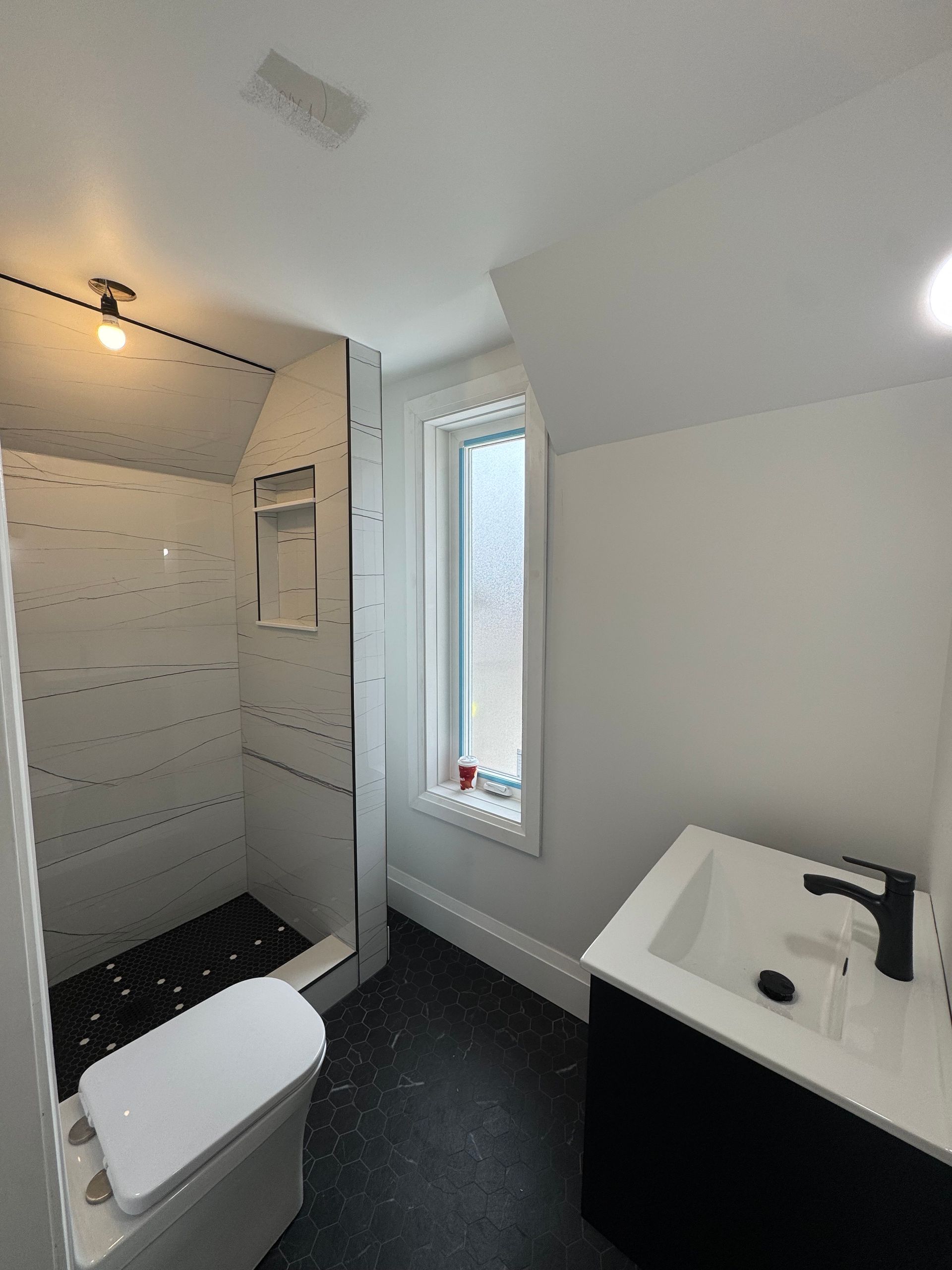
- Frosted or Textured Windows: Maintain privacy while letting in daylight.
- Skylights or Solar Tubes: Ideal for bathrooms with limited exterior windows, especially in Guelph or midtown Toronto homes.
- Mirror Placement: Mirrors across from windows reflect and amplify natural light, reducing reliance on artificial lighting.
Example: A split-zone master bathroom in Oakville can use a frosted window near the vanity to provide soft daylight, while the shower area relies on a wet-rated recessed fixture.
6. Energy Efficiency and Smart Controls
Energy efficiency improves both cost savings and environmental impact.
- LED Lighting: Long-lasting, energy-efficient, excellent color rendering.
- Smart Controls: Motion sensors, timers, and dimmers can automatically adjust brightness based on time of day or activity.
- Zoned Switching: Allows independent control of vanity, ambient, and accent lights for maximum flexibility.
GS Plumbing Advice: For large Toronto master bathrooms or luxury bathrooms in Burlington, installing a smart lighting system reduces electricity consumption while improving comfort.
7. Safety Considerations
Safety is a priority in wet environments:
- Wet-Rated Fixtures: Required inside showers or over bathtubs.
- GFCI Circuits: Essential for all bathroom outlets and lighting circuits.
- Slip Prevention: Ensure floor areas near lighting are well-illuminated to reduce accidents.
Extra Tip: In Guelph and Etobicoke, colder winters may make bathroom floors slippery. Combining proper lighting with anti-slip mats or textured tile improves overall safety.
8. Style and Design Integration
Lighting also contributes to the overall design and feel of your bathroom:
- Modern Bathrooms: Sleek recessed LEDs, linear vanity lights, and minimalistic wall sconces.
- Traditional Bathrooms: Lantern-style sconces, decorative chandeliers, and layered ceiling lights.
- Luxury Bathrooms: Layered ambient, accent, and task lighting, statement chandeliers over freestanding tubs, and integrated LED strips along vanities or niches.
GS Plumbing Tip: Align fixture style with room layout for cohesive, functional, and visually appealing spaces throughout Oakville, Mississauga, Toronto, and surrounding GTA homes.
9. Final Checklist for Bathroom Lighting Renovations
- Layer ambient, task, and accent lighting for a balanced, efficient plan.
- Choose damp or wet-rated fixtures appropriate for location and layout.
- Place task lighting at eye level to minimize shadows.
- Adjust ambient lighting based on natural light and window orientation.
- Use LED fixtures and smart controls for energy efficiency.
- Ensure all circuits are GFCI-protected.
- Highlight design features with subtle accent lighting.
- Match fixture style to your home’s interior design and layout.
Bonus Tip: GS Plumbing recommends working with a professional lighting designer or licensed plumber to ensure proper placement, compliance with Ontario building codes, and safe integration with bathroom electrical systems.